
UV damage is the leading cause of premature skin aging, yet many people reserve sunscreen for beach days only. The truth is simpler: SPF 50 should be as routine as brushing your teeth. Every day—even cloudy ones—your skin faces UV radiation that breaks down collagen, triggers inflammation, and deepens fine lines. A consistent daily SPF 50 routine doesn't just prevent sunburn; it preserves your skin's elasticity, maintains an even tone, and protects your skin barrier from oxidative stress. Learn why this single habit matters most, and how to build a complete sun protection routine tailored to your lifestyle.
Quick Answer
SPF 50 protects your skin from UVA and UVB rays that cause premature aging, collagen breakdown, and dark spots. Daily use prevents 98% of UVB rays and maintains your skin barrier's integrity. Incorporating SPF 50 into your routine is the single most effective anti-aging investment you can make, protecting against photoaging that leads to fine lines, wrinkles, and uneven texture.
Assess Your Sun Damage Risk with SkinCheck
Not sure if your current sun protection is adequate? Use our SkinCheck AI tool to analyze your skin type, UV exposure patterns, and current sun care routine. SkinCheck asks targeted questions about your daily habits, skin concerns, and environmental factors—then delivers personalized recommendations for which Dr. C. Tuna Sun products would work best for your unique needs. This takes the guesswork out of routine building and ensures you're addressing your specific risk factors. Get your personalized sun protection assessment in under two minutes.
03 - Smart Skin Diagnosis
Know Your Skin.
Transform Your Routine.
Farmasi's AI skin scanner analyses your skin type, hydration levels, concerns and more, then recommends the exact Dr. C. Tuna products your skin needs.
- 15+ skin parameters analysed
- Dr. C. Tuna product matching
- 100% private - no data stored
The Science of UV Damage and Skin Aging
UV radiation penetrates the skin in two forms: UVA rays, which age skin by breaking down collagen and elastin deep within the dermis, and UVB rays, which burn the epidermis and trigger DNA damage in skin cells. Even a single day of UV exposure without protection activates inflammatory pathways that generate free radicals—unstable molecules that accelerate collagen degradation and weaken your skin's natural repair mechanisms. Over time, this cumulative damage manifests as fine lines, leathery texture, age spots, and a compromised skin barrier that struggles to retain moisture. The most compelling evidence comes from long-term sun exposure studies: people who consistently use SPF 50 show 40% less photoaging by their 50s compared to those with minimal protection. This isn't about vanity—it's about preserving the structural integrity of your skin at the cellular level.
Why SPF 50 Matters More Than Lower SPF Numbers
The difference between SPF 30 and SPF 50 is more significant than the numbers suggest. SPF 30 blocks approximately 97% of UVB rays, while SPF 50 blocks 98%—a seemingly small gap that translates to meaningful protection in real-world conditions. This extra 1% becomes critical during prolonged outdoor exposure, midday sun intensity (10 AM to 4 PM), or on reflective surfaces like water and sand where UV rays bounce upward. Additionally, SPF 50 formulas are typically developed with higher concentrations of UV filters and antioxidant stabilizers that maintain effectiveness even as they degrade throughout the day. For daily use—especially if you spend time near windows or in outdoor settings—SPF 50 provides a reliable safety margin that doesn't require you to reapply as frequently as lower SPF products. This consistency makes habit-building easier and ensures your skin receives uninterrupted protection.
Building Your Daily SPF 50 Routine: A Complete Strategy
An effective sun protection routine isn't just about slathering on one product—it's a layered strategy that shields your entire body and adapts to your daily environment. The goal is to create a seamless ritual where sun protection becomes as automatic as moisturizing. This means protecting your face, neck, chest, and any exposed areas with targeted products designed for different textures and lifestyles. A comprehensive routine acknowledges that different areas of your body need different formulations: your face benefits from a lightweight, breathable cream that won't clog pores, while your body requires richer, faster-absorbing coverage you can reapply without residue. Your eyes, lips, and the delicate areas around your mouth need stick formulations that stay in place and resist moisture. By customizing each step to the specific needs of that zone, you're more likely to maintain consistency and actually protect all at-risk areas. The following routine walks you through each essential step, starting with targeted coverage for your most vulnerable zones and building toward comprehensive, all-day protection.
Step 1 — Shield Sensitive Areas with Precision Application
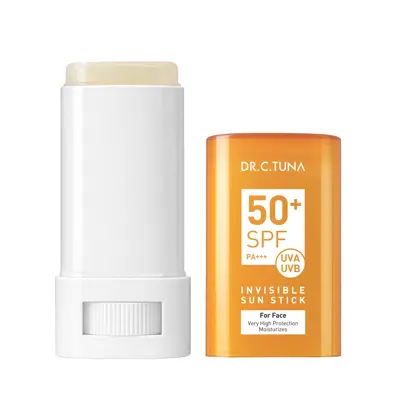
Your eyes, lips, and the corners of your nose are among the thinnest-skinned areas on your face, making them disproportionately vulnerable to UV damage and skin cancer risk. These zones cannot tolerate heavy creams—they need a formula that stays put, resists sweating and water contact, and provides reliable broad-spectrum protection without migration into your eyes. A stick formulation is ideal here because it applies directly where you need it, remains stable throughout the day, and doesn't require blending or fingers near sensitive tissues. Look for a product with a smooth, non-greasy texture that uses mineral or hybrid UV filters known for stability and sensitivity-friendly profiles. Dr. C. Tuna Invisible Sun Stick SPF50+, with its precision applicator and sweat-resistant formula, is the ideal targeted protector for delicate facial zones that demand both efficacy and comfort.
Skincare
£17.80
Step 2 — Layer Radiance with UV Protection and Nourishment
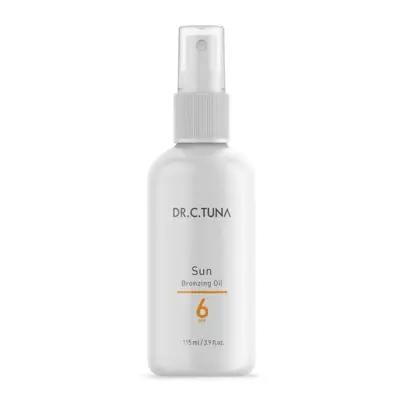
After protecting your most vulnerable zones, the next layer introduces both sun safety and skin-nourishing benefits through a formula that addresses aesthetic concerns like dullness or uneven tone. A bronzing oil serves dual purposes: it provides UV filtration while delivering antioxidants and skin-conditioning ingredients that counteract the dehydrating effects of sun exposure. The oils in these formulas create a protective moisture barrier that helps your skin retain hydration throughout the day—critical because UV exposure accelerates transepidermal water loss (TEWL), the process by which skin loses moisture to the environment. By layering an oil-based sun product, you're not just adding SPF; you're reinforcing your skin barrier's ability to stay supple and resilient. Look for sun oils that combine mineral filters with plant-derived antioxidants like vitamin E or sea buckthorn, which neutralize free radicals generated by UV exposure. Dr. C. Tuna Sun 6 SPF Bronzing Oil, with its antioxidant-rich formula, is the ideal protection layer that adds radiance while defending your skin's moisture matrix from UV-induced dehydration.
Skincare
£8.90
Step 3 — Extend Protection to Your Body
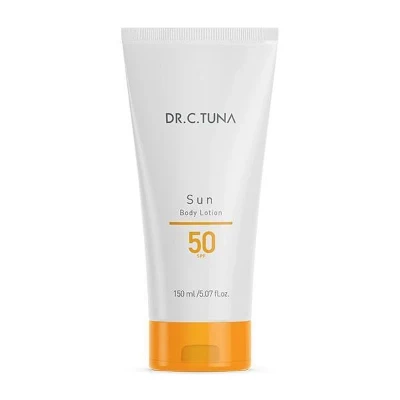
Your body receives less consistent sun protection than your face, yet it accumulates significant UV damage over a lifetime—especially your chest, shoulders, hands, and legs, which are frequently exposed and rarely reapplied with sunscreen. Body skin has fewer oil glands and a thinner stratum corneum (the skin's outer barrier) compared to facial skin, making it more prone to sun damage and more dependent on consistent, easily reapplied protection. A body lotion formulated with SPF 50 must balance two competing needs: lightweight texture that absorbs quickly enough for daily use without leaving a greasy residue, and rich enough coverage that it actually adheres to skin and provides reliable protection. Look for body sun lotions that include ceramides or glycerin—ingredients that support barrier function and hydration while the SPF filters do their protective work. Dr. C. Tuna Sun Body Lotion, with its fast-absorbing formula and SPF 50 broad-spectrum protection, is the ideal daily body shield that covers large surface areas without the greasiness that leads to skipped applications.
Skincare
£9.79
Step 4 — Seal Hydration with a Protective Barrier
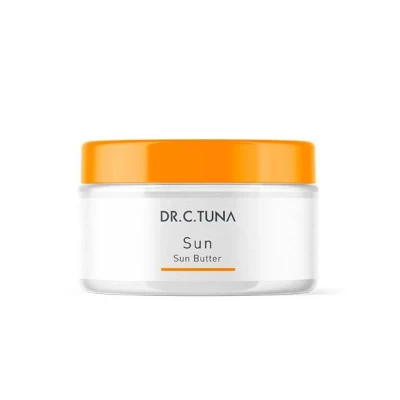
Once you've applied targeted face and body sun products, the final layer is a rich, occlusive formula that seals in hydration while adding an extra defensive barrier against environmental stressors. A sun butter serves as both a hydration lock and a reinforced UV shield—its dense, nourishing texture creates a waterproof barrier that maintains skin moisture levels while the SPF filters provide supplementary protection. This step is especially critical if you plan outdoor activity, prolonged sun exposure, or if your skin tends toward dryness; the occlusive layer prevents the dehydrating effects of UV exposure and wind. Butters typically contain plant oils and waxes that mimic your skin's natural lipid composition, making them highly compatible with your skin barrier. By the time you reach this step, you've created a comprehensive multi-layer defense: targeted protection for sensitive zones, antioxidant-rich coverage for your face, full-body SPF lotion, and now a final occlusive seal. Dr. C. Tuna Sun Butter, with its nourishing plant-oil base and SPF protection, is the ideal final layer that locks hydration in place while providing reinforced defense against sun damage and environmental stress.
Skincare
£14.24
Step 5 — Complete Your Shield with Comprehensive Face Protection
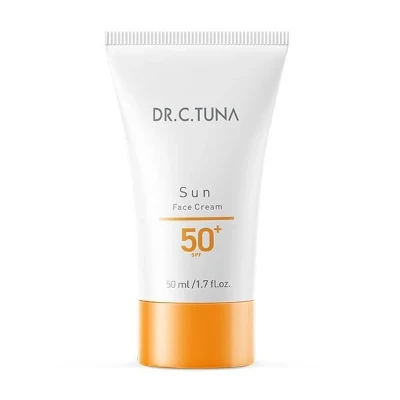
Your face is your most visible asset and the most susceptible to photoaging—it accumulates the most UV exposure over a lifetime and shows sun damage most obviously through fine lines, pigmentation, and loss of elasticity. A dedicated SPF 50 face cream is the cornerstone of any serious sun protection routine because it must balance multiple demands: high-level UV filtration, lightweight texture that fits under makeup or wears comfortably alone, hydration that supports barrier function, and antioxidant ingredients that neutralize free radicals from sun exposure. A premium face cream goes beyond basic sun blocking; it addresses the biological reality that UV exposure causes inflammation, collagen breakdown, and barrier compromise simultaneously. The ideal formula includes not just UV filters but also ceramides for barrier repair, peptides to support collagen synthesis, and antioxidants like vitamin C or niacinamide to counteract oxidative stress. Dr. C. Tuna Sun Face Cream SPF 50 Plus, with its comprehensive UV filter system and barrier-supporting ingredients, is the ideal daily facial protector that defends against aging while nourishing your skin's repair and resilience mechanisms.
Skincare
£9.79
Your Complete Sun Routine at a Glance
- ☀️ Morning — Cleanse → Apply Dr. C. Tuna Invisible Sun Stick to sensitive zones (eyes, lips, nose)
- 🌞 Layer — Apply Dr. C. Tuna Sun 6 SPF Bronzing Oil for radiance and barrier support
- 💧 Body Coverage — Apply Dr. C. Tuna Sun Body Lotion to chest, shoulders, arms, legs
- 🛡️ Seal — Apply Dr. C. Tuna Sun Butter as final occlusive barrier
- ✨ Face — Apply Dr. C. Tuna Sun Face Cream SPF 50 Plus as your complete facial shield
- 🔄 Throughout Day — Reapply face cream every 2 hours if outdoors; refresh body lotion after swimming
- 🌙 Evening — Gently cleanse to remove all sun products; follow with hydrating recovery serum
- 📅 Every Day — Repeat routine regardless of cloud cover; UV rays penetrate clouds and reflect off surfaces
The Complete Sun Collection
Common Questions About Daily SPF 50 Routines
Do I really need SPF 50 every single day, even when it's cloudy?
Yes. Approximately 80% of UV rays penetrate clouds, and they reflect off surfaces like pavement, water, and buildings. Even on overcast days indoors near windows, you receive cumulative UV exposure. The damage from daily, low-level UV exposure actually exceeds occasional intense sun exposure because consistency matters more than intensity for photoaging prevention. Daily SPF 50 is about building protection into every single day, not just beach days.
Can I use just one SPF 50 product, or do I need the whole routine?
A complete routine provides layered, comprehensive protection that addresses different zones with appropriate formulations. Using only a face cream misses protection for your body, lips, and eyes—areas that show photoaging quickly and are susceptible to skin cancer. That said, if you can commit to one product consistently, a good SPF 50 face cream is better than a perfect routine you skip. The best routine is the one you'll actually use every day.
How often should I reapply SPF 50 throughout the day?
If you're indoors most of the day, your morning application is typically sufficient. If you're outdoors, reapply every two hours—or immediately after swimming or heavy sweating. The two-hour guideline assumes continuous UV exposure; it's more conservative than necessary for light indoor exposure. Pay special attention to reapplication if you're near reflective surfaces like water or sand, where UV intensity increases significantly.
Will daily SPF 50 cause vitamin D deficiency?
No. The amount of UV exposure required for vitamin D synthesis is minimal—you can produce adequate vitamin D with brief, unprotected exposure (typically 10–30 minutes a few times per week, depending on skin tone and latitude). Daily SPF 50 use doesn't prevent this minimal exposure from occurring, and you can also obtain vitamin D from dietary sources like fatty fish, egg yolks, and fortified foods. Sun protection and vitamin D synthesis aren't mutually exclusive.
What's the difference between chemical and mineral SPF 50 filters?
Chemical filters (like oxybenzone or avobenzone) absorb UV rays and convert them to heat; mineral filters (like zinc oxide or titanium dioxide) reflect UV rays. Mineral filters start working immediately upon application, while chemical filters require 15–20 minutes. Both provide broad-spectrum protection when formulated correctly. Some people prefer mineral for sensitive skin or quick applications, while others prefer chemical for lighter feel or less visible residue. Both types can be equally effective at SPF 50.
Discussion